The week ends, and you move on.
Maybe you close the laptop. Maybe you answer a few more messages from your phone. Maybe you carry the unfinished pieces into the weekend and call it flexibility. By Monday, the next wave has already started, and whatever you could have learned from the last week gets buried under new meetings, new problems, and new urgency.
That is how capable people lose the thread.
Not because they are careless. Because they are moving too fast to learn from what just happened.
Reflection sounds soft until you realize it is one of the most practical ways to improve your judgment. It helps you see patterns before they become problems. It helps you notice what drained capacity, what created leverage, what kept repeating, and what deserves a different decision next time.
Most professionals do not need a more complicated planning system. They need a weekly pause that turns experience into information.
Why Weekly Reflection Gets Skipped
The reason is obvious: it does not feel urgent.
There is always something louder. A message to answer. A deadline to hit. A meeting to prepare for. A decision to make. Reflection rarely announces itself as the most important task on the calendar.
But skipped reflection has a cost.
You repeat patterns you could have caught. You keep solving the same problem from scratch. You keep carrying work that should have been redesigned, delegated, or stopped. You miss the early signal that something is working — or that something is quietly breaking.
A weekly reflection is not about journaling for the sake of journaling. It is an operating practice. It gives your week a feedback loop.
“If you never stop to name what the week taught you, you are not building wisdom. You are just accumulating experience.”
The 20-Minute Reflection
This practice is simple by design. It should not require a new app, a complicated template, or an hour you do not have.
Set a timer for 20 minutes. Open your AI tool. Use voice if you can, because reflection works better when you think out loud. Talk through the week without trying to organize it first. Say what happened. Say what felt heavy. Say what moved. Say what you avoided. Say what surprised you.
Then let AI help you turn that raw reflection into insight.
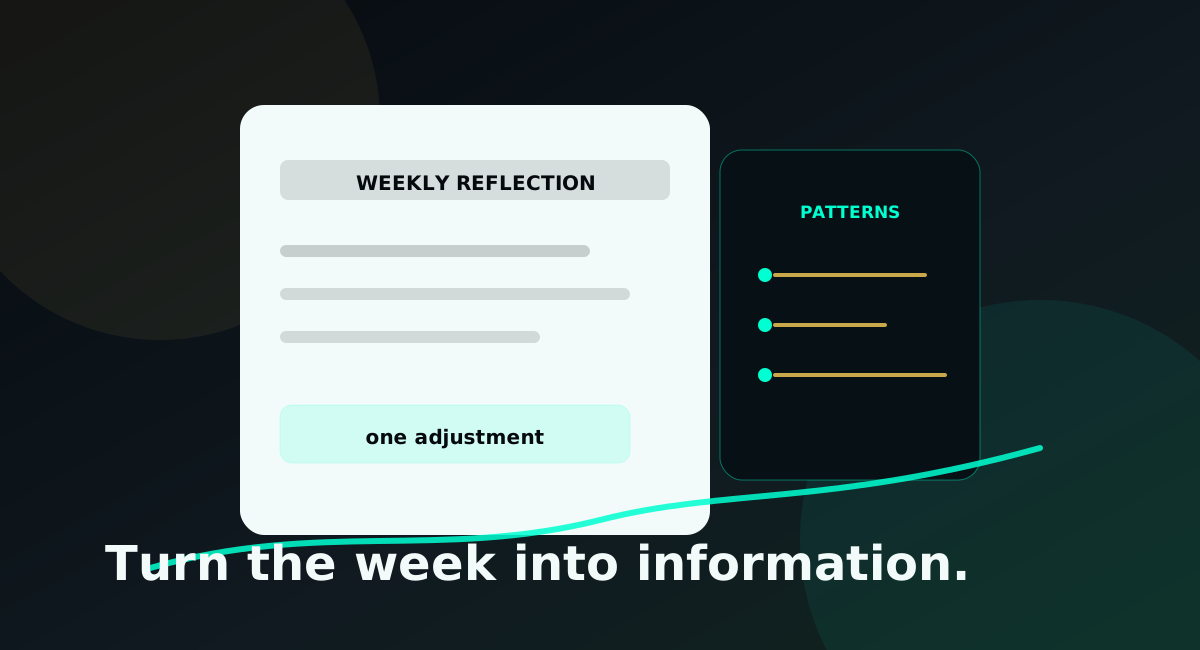
5 minutes to talk it out. 10 minutes to let AI find the patterns. 5 minutes to choose the one adjustment that belongs on next week’s calendar.
The goal is not for AI to judge how your week went. You already lived it. The goal is for AI to help you see the patterns inside what you just described.
The Prompt That Makes It Useful
Use this when you need a first move, not a full weekly operating system.
“I want to reflect on this week and turn it into useful insight. Here is my raw reflection: [voice dump or paste notes]. Help me identify: (1) what created the most capacity, (2) what drained the most capacity, (3) what pattern repeated that I should pay attention to, (4) what I avoided that still needs a decision, and (5) the one adjustment I should make next week. Keep the response practical and direct. Do not give me generic advice. Tie every recommendation back to something I actually said.”
The last line matters. “Tie every recommendation back to something I actually said.” That keeps the output grounded. It prevents AI from giving you vague advice that sounds helpful but does not belong to your real week.
This gives you one weekly reset. Capacity, UnLocked gives you the broader set of practices for framing problems, planning better, reducing meeting load, and turning AI into a repeatable capacity system.
What to Look For
After you run the prompt, look for four signals.
Repeated Frustration
There may be a system, expectation, or boundary issue that needs to be redesigned.
Repeated Delay
There may be a decision, conversation, or risk you are avoiding.
Repeated Energy
There may be work that deserves more space because it creates leverage.
Repeated Confusion
There may be a clarity gap that needs to be solved before more effort is added.
Do not turn the reflection into a self-critique. That is not the point. The point is pattern recognition.
You are looking for the places where your week is trying to tell you something.
The One-Adjustment Rule
The mistake most people make after reflection is trying to change too much.
They identify seven problems, create five goals, build a new system, and abandon all of it by Wednesday. That is not reflection. That is overcorrection.
End with one adjustment.
If it cannot fit on next week’s calendar, it is not an adjustment yet. It is only an idea.
One meeting to shorten. One conversation to schedule. One task to delegate. One boundary to hold. One decision to stop postponing. One workflow to build. One recurring drain to redesign.
The power of weekly reflection is not in producing a long list of insights. It is in choosing one adjustment that makes the next week lighter, clearer, or more aligned.
Small changes compound when they are chosen from real evidence.
How to Start This Friday
Block 20 minutes at the end of the week. Treat it like a meeting with your future capacity.
Use voice. Talk through the week. Run the prompt. Choose one adjustment. Put that adjustment on next week’s calendar before you close the loop.
That last step matters. If the adjustment does not land somewhere real, it becomes another good idea you had while tired.
This is the kind of practice that makes AI useful without making it complicated. AI holds the mirror. You make the decision.
This is Capacity, UnLocked in its simplest form: less noise, more pattern recognition, better use of the intelligence you already have.
Turn the reset into a system with Capacity, UnLocked.
If this reflection gave you one useful adjustment, the full Capacity, UnLocked playbook helps you build the broader operating rhythm: clearer planning, fewer drains, better decisions, and more useful capacity every week.
Explore Capacity, UnLocked →